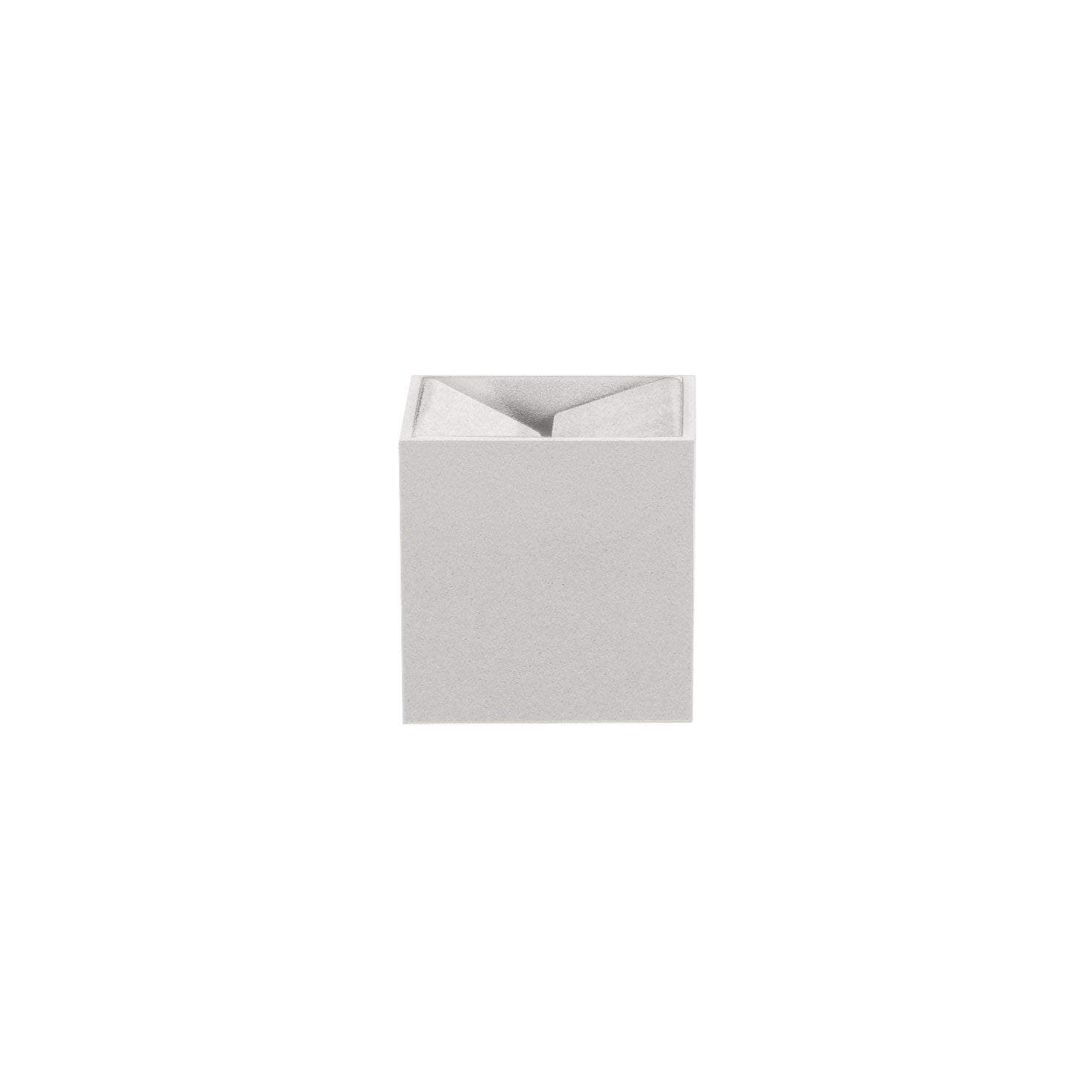
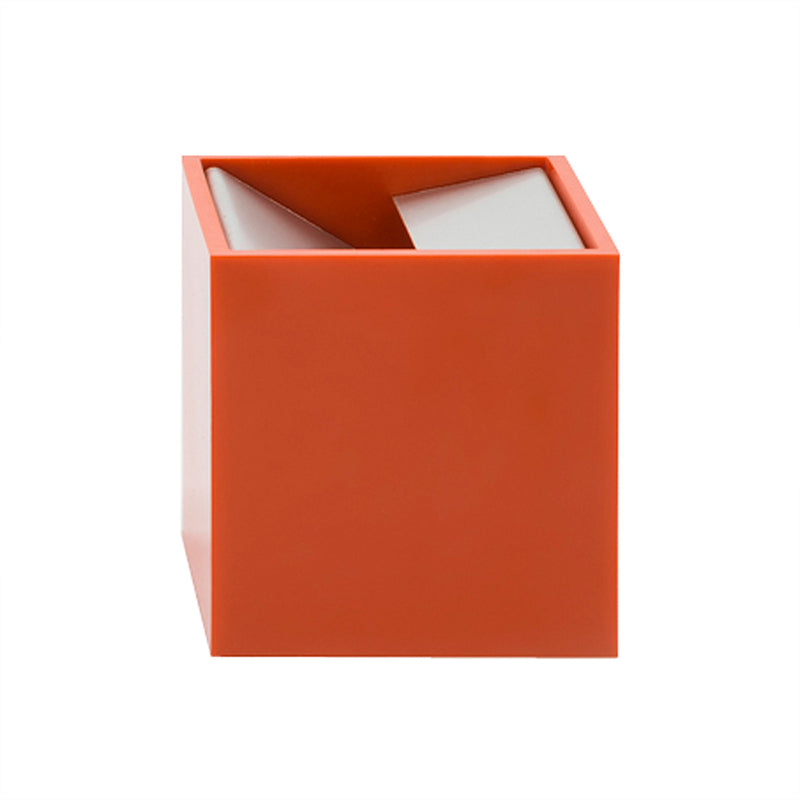
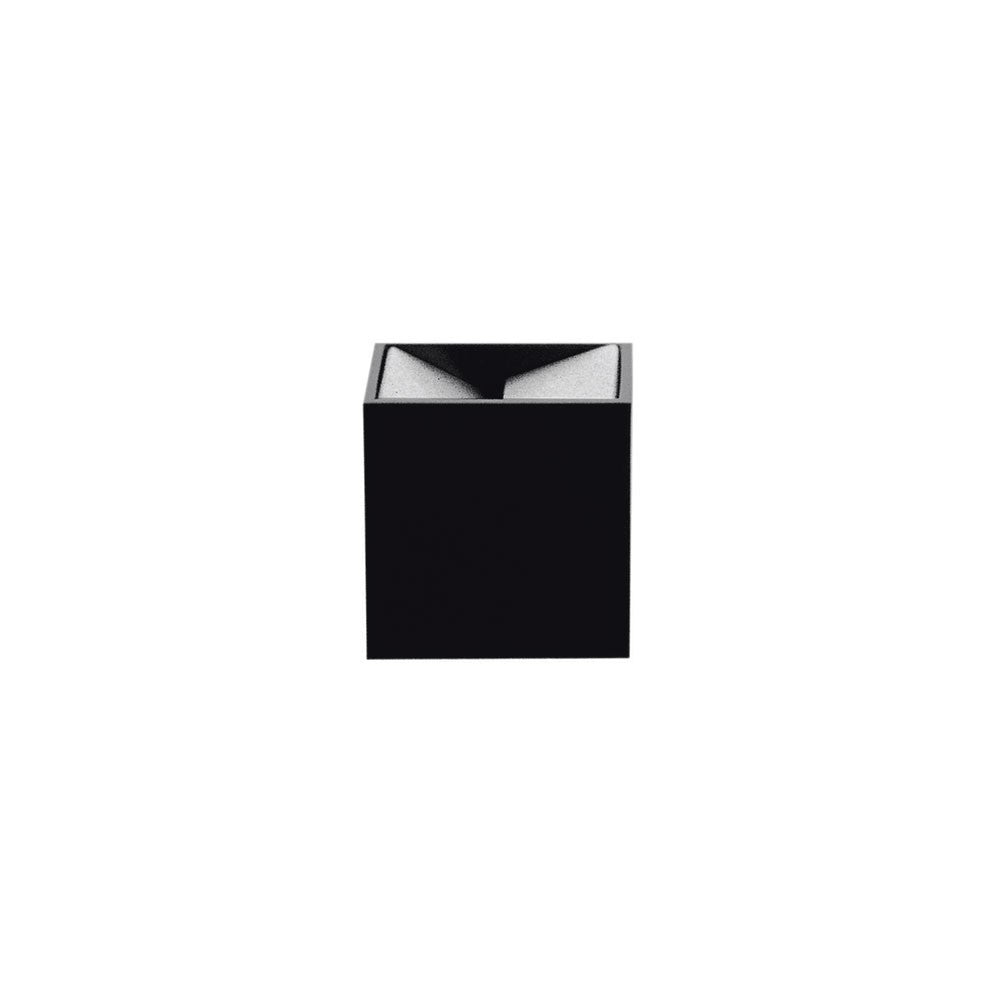
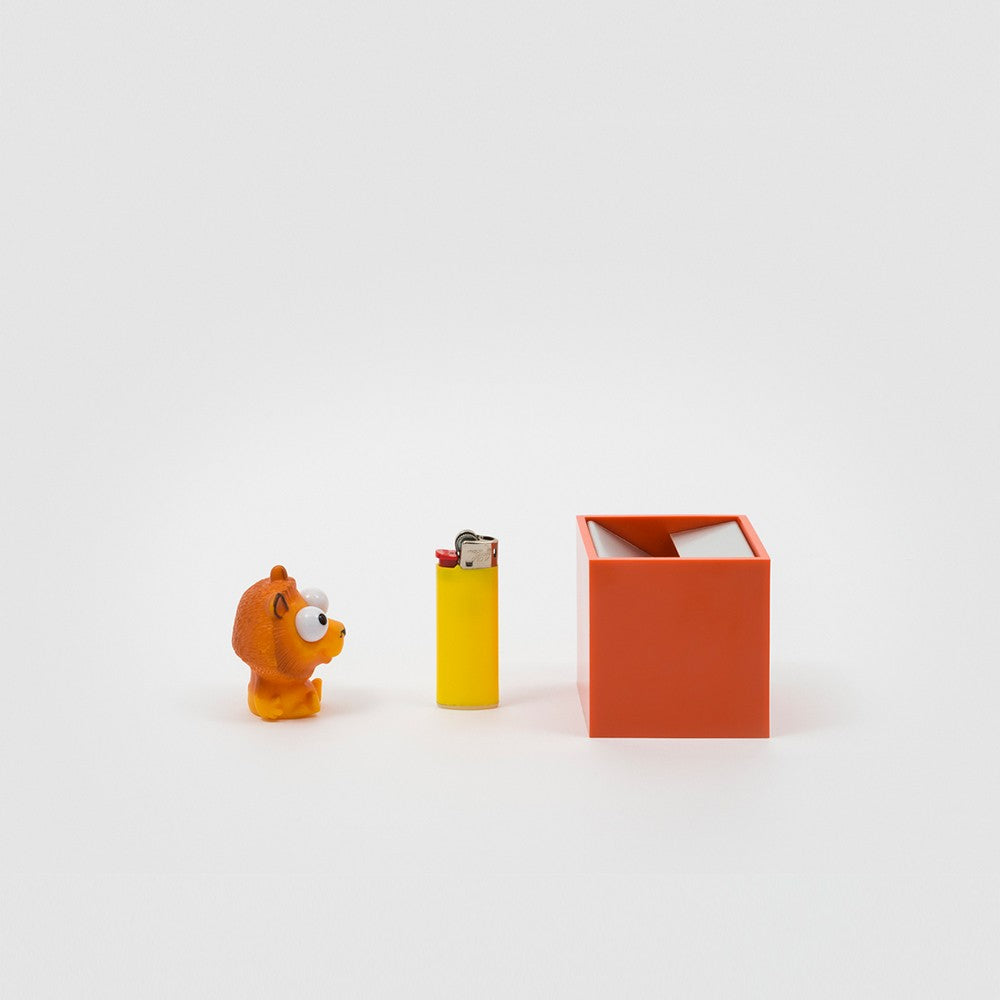
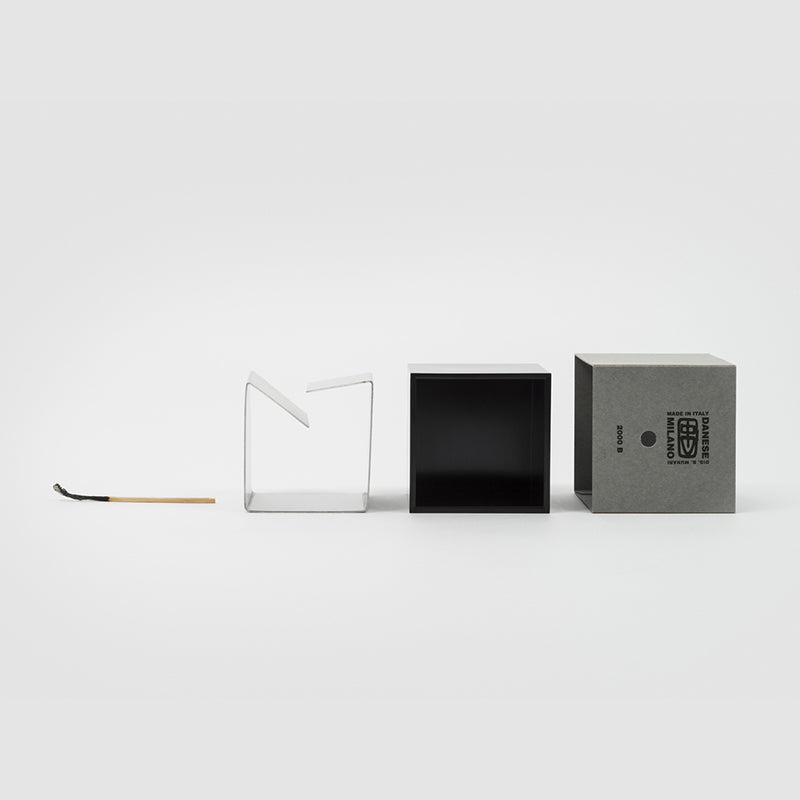
Anodized aluminum, melamine, non-flammable.
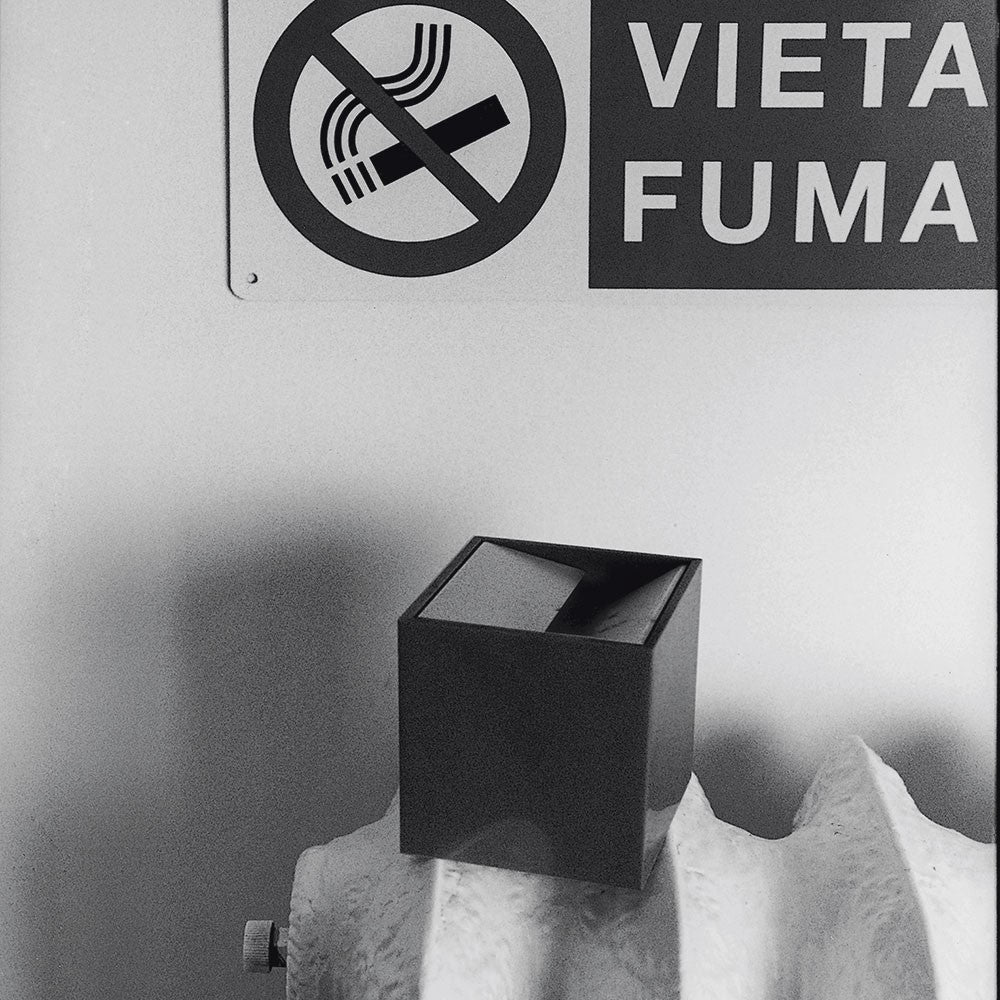
The cube ashtray is one of the cult objects of Italian design.
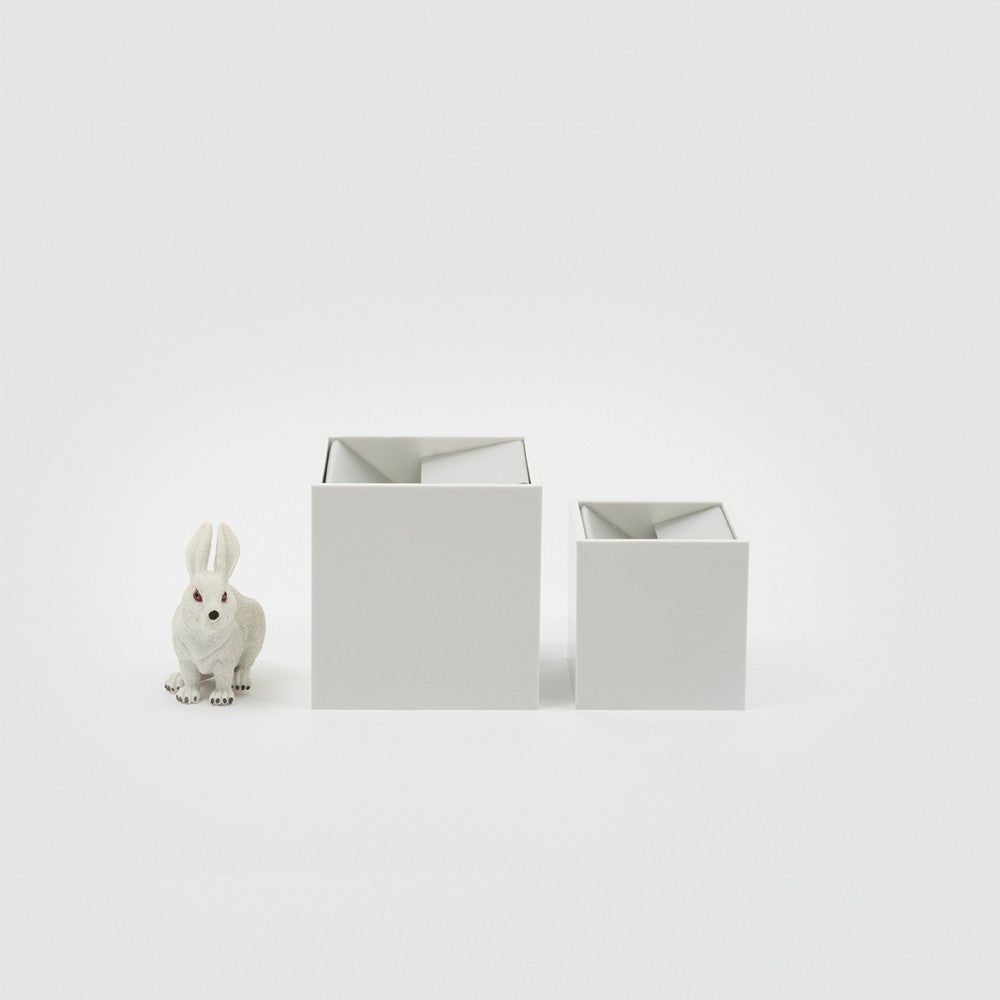
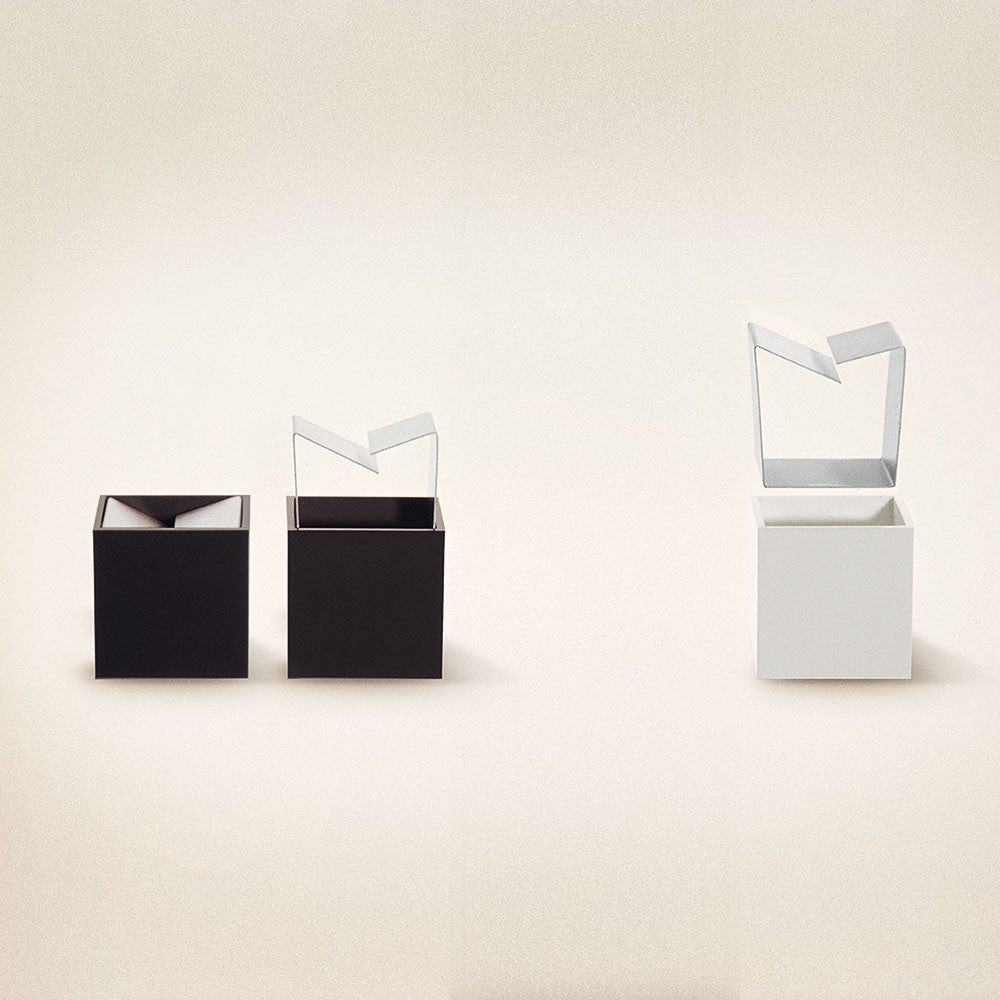
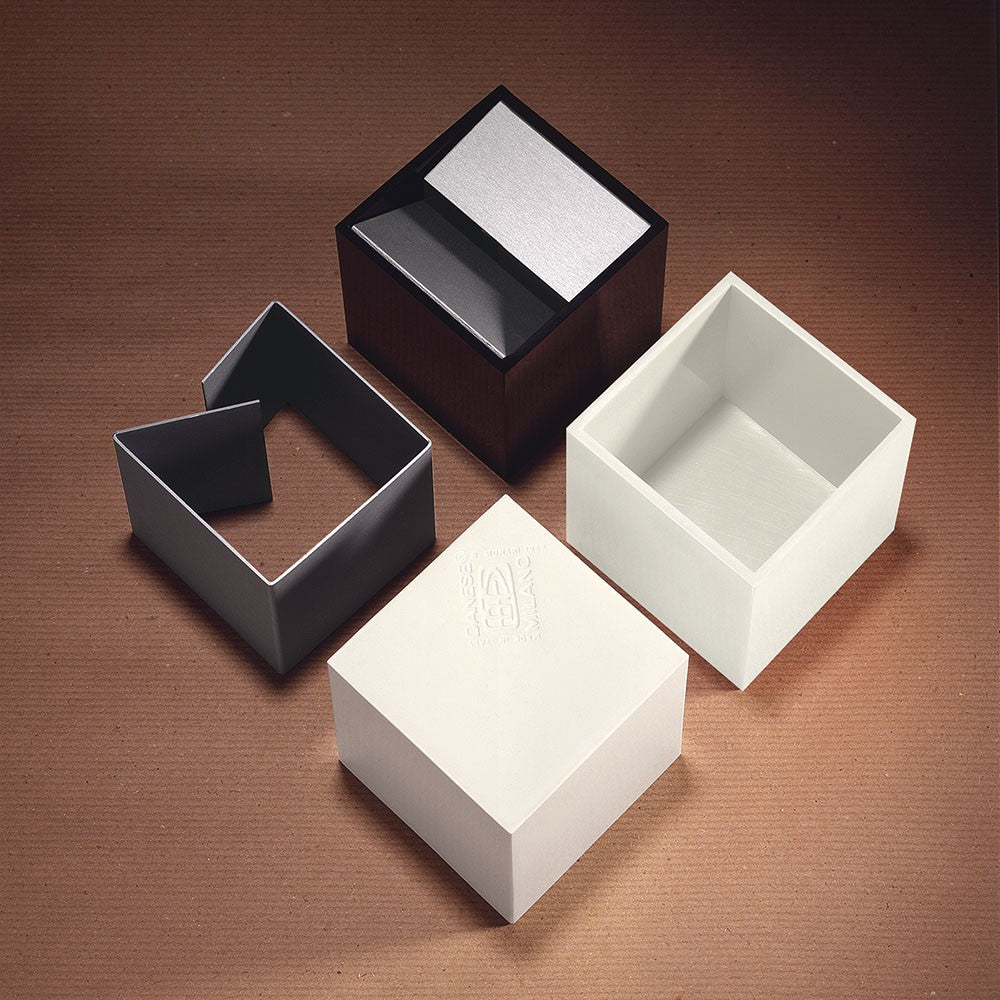
It is an extremely simple object: a module consisting of a polymer cube open on one side and a bent steel strip.
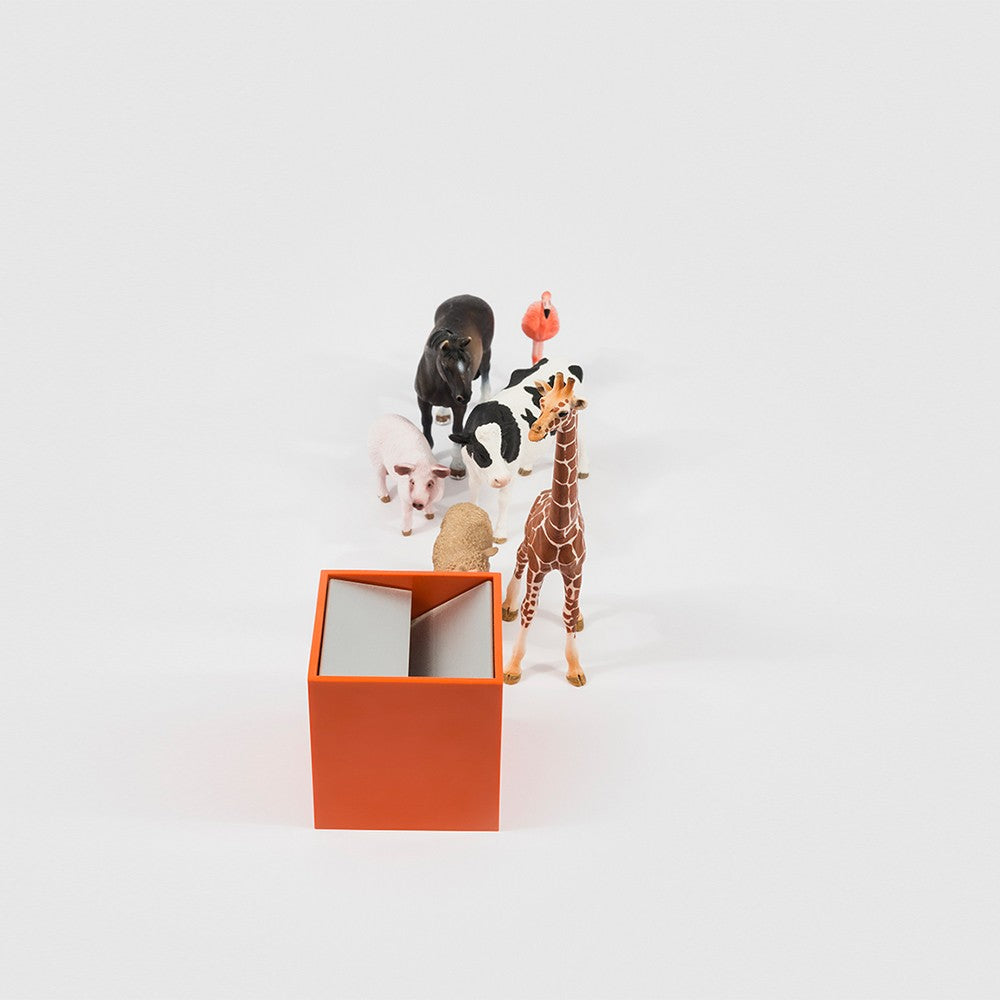
The object is extremely functional: it contains the ash and cigarette butts, hides them from view and prevents them from accidentally spilling.
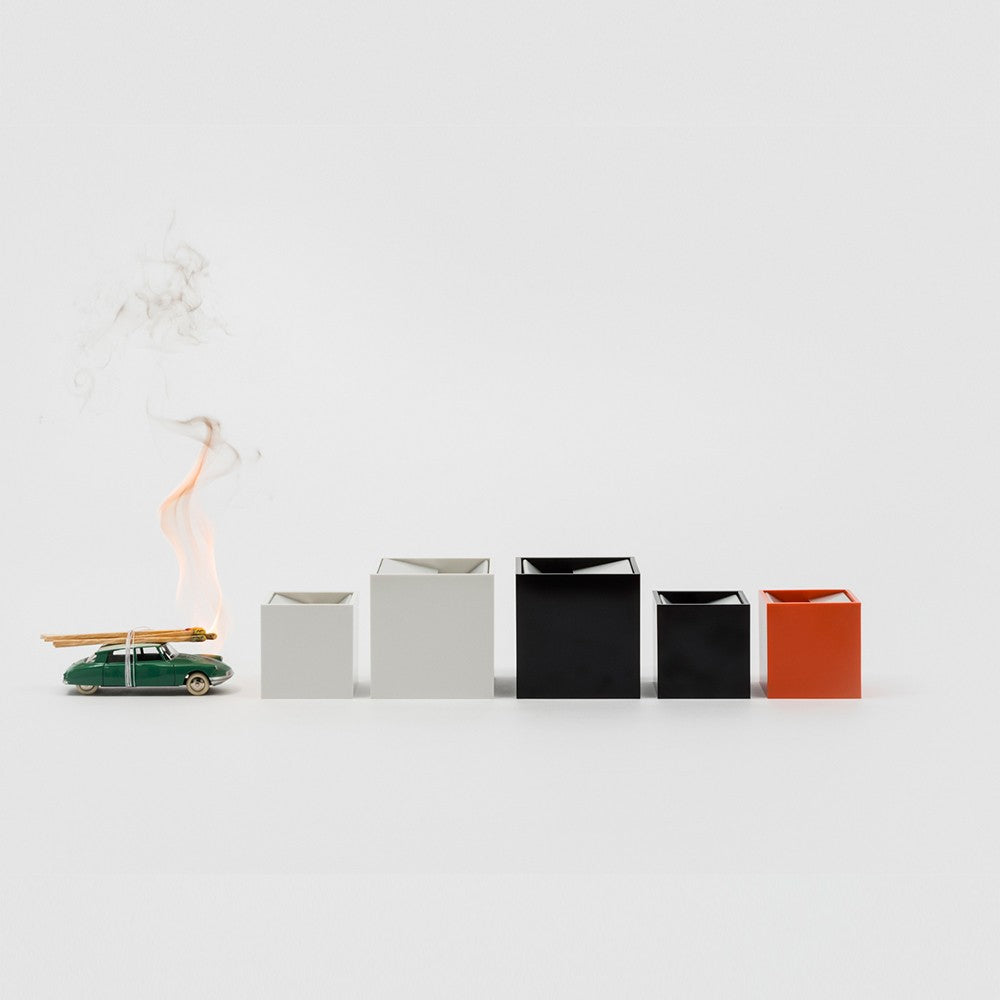
The cubic ashtray, which gave rise to an entire family of objects, including the Canarie desk set and the floor ashtray, is present in the design collections of all the most important museums in the world, including the MoMA in New York.
Bruno Munari is one of the greatest protagonists of 20th-century Italian art, design, and graphics.
Throughout his artistic career he has maintained his creativity unchanged in support of his investigations into form, experimenting and communicating it through words, objects and toys.
He began his career close to the Futurist movement, participating in group exhibitions at the Galleria Pesaro, the Venice Biennale, and the Quadrennials in Rome and Paris, but later distanced himself from the movement to explore more deeply the fields of form and color, and the aesthetic autonomy of objects. Among his most emblematic works are the "useless machines," mechanical devices that explore the possibilities of perception, presented as "experimental models intended to verify the possibilities of aesthetic information in visual language," works that predate optical art. From 1934 to 1936, he devoted himself to abstract painting.
Together with A. Soldati, G. Monnet, and G. Dorfles, he founded the MAC (Movement for Concrete Art). Since the 1950s, he has produced "concave-convex" sculptures, "positive-negative" paintings, and experimental three-dimensional models. He has received several awards during his lifetime, including the Compasso d'Oro from the ADI (1954, 1955, 1970, and 1995 for his lifetime achievement), the Japan Design Foundation Award in 1985, and an honorable mention from the New York Academy of Sciences in 1974.